


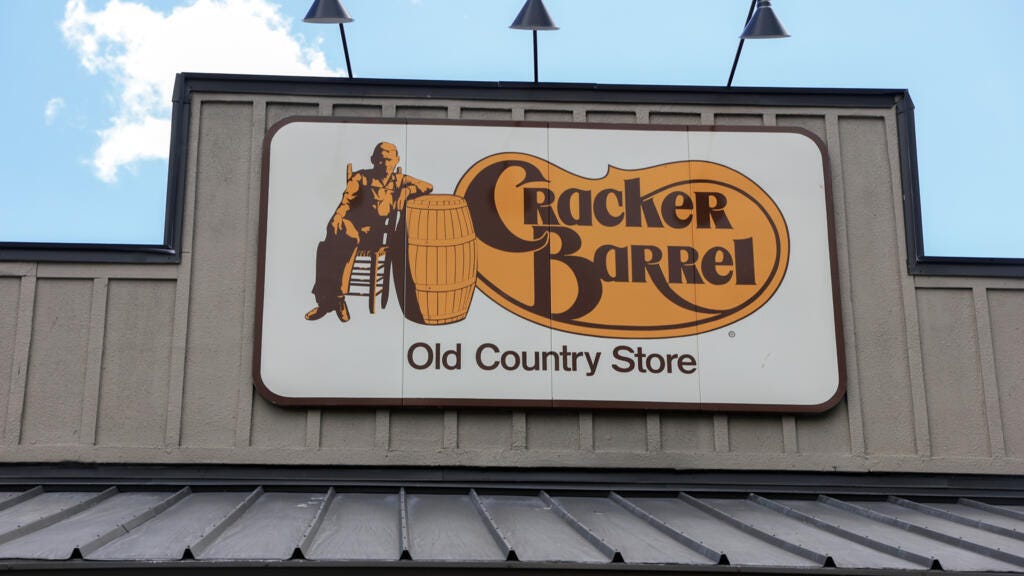
A Personal Note: This analysis began as a quest to understand why my elderly mother, after years of weekly brunches at our local Cracker Barrel, recently asked me to start taking her somewhere else. What I discovered was a pattern that appears disturbingly familiar to documented private equity extraction strategies. This isn't just about stock prices and corporate maneuvers; it's about the systematic destruction of American institutions that families like mine have treasured for decades.
What's happening at Cracker Barrel isn't corporate incompetence; it's a carefully orchestrated wealth extraction that has destroyed countless other American companies. The $100 million stock collapse, "overwhelmingly positive feedback" claims, and systematic brand destruction aren't signs of failed leadership. They're the hallmarks of a private equity setup that has bankrupted giants from Toys"R"Us to Red Lobster while enriching Wall Street financiers.
This is the story of how vulture capitalism systematically hollows out American business; and why Cracker Barrel appears to be next.
The Private Equity Playbook: A Proven Method of Destruction
Before examining Cracker Barrel's suspicious (yet unsettlingly familiar) trajectory, we must understand the private equity business model that has devastated American retail and restaurants. It's a legal form of corporate pillaging with three simple steps:
Step 1: The Leveraged Buyout
Acquire a company using minimal cash (10-20% equity)
Load the target with massive debt (80-90% of purchase price)
Make the company responsible for paying back the acquisition debt
Step 2: Immediate Value Extraction
Special Dividends: Extract $500M-1B immediately after purchase
Management Fees: $15-50M annually for "advisory services"
Transaction Fees: $50-100M every time they refinance debt (incentivizing more borrowing)
Asset Sales: Sell company's real estate, keeping proceeds while forcing company to lease back its own properties
All fees are legally theirs to keep, regardless of company performance
Step 3: The Controlled Collapse
Company struggles under massive debt payments and rising rents
Unable to invest in modernization or compete effectively
Files for bankruptcy while private equity has already profited handsomely
Workers lose jobs, communities lose businesses, PE firm keeps all extracted fees
Why This Is Completely Legal:
PE firm creates shell company to borrow money, then merges it into target company
Target company becomes responsible for debt used to purchase itself
All debt is "recourse only" to operating company, not PE firm
Fee structures are contractually protected and senior to other creditors
PE firm has no legal obligation to pay back debt if company fails
The genius of the scam: They don't steal money; they've created a legal framework allowing wealth extraction while transferring all risk to the operating company.
Case Study 1: The Toys"R"Us Execution
In 2005, Bain Capital, KKR, and Vornado bought Toys"R"Us for $6.6 billion using only $1.3 billion of their own money. The other $5.3 billion was debt loaded onto the company.
The Extraction:
Collected $464 million in fees and interest payments during ownership
Forced the company to pay $400 million annually just to service debt
Made back their small personal investments through advisory and management fees
The Result:
33,000 workers lost their jobs with no severance
Company was profitable with growing operating income before the debt burden
Handled 20% of all U.S. toy sales at bankruptcy; no healthy company should fail with that market share
Case Study 2: The Red Lobster Heist
Golden Gate Capital bought Red Lobster for $2.1 billion in 2014, then immediately sold the company's real estate for $1.5 billion in a sale-leaseback deal.
The Extraction:
Golden Gate nearly made back its entire purchase price while turning Red Lobster into a permanent leaser
Red Lobster was forced to pay $200 million annually in rent by 2023, with 2% increases locked in
"Achieved strong returns for our investors" according to Golden Gate's managing director
The Result:
Red Lobster filed for bankruptcy in 2024
Companies bought by private equity go bankrupt 10 times more often than those not purchased by these firms
Case Study 3: The JoAnn Fabrics Annihilation
Leonard Green & Partners demonstrated the playbook's ruthless efficiency with JoAnn Fabrics; a 75-year-old American institution destroyed in just 14 years.
The Setup (2011):
Bought JoAnn for $1.6 billion in leveraged buyout
Company had no debt in 2010 and hit record-high stock prices
Immediately saddled with massive debt obligations
The Extraction:
Over $1 billion in debt loaded onto the company
Despite 95% of stores being profitable, debt service consumed all cash flow
Leonard Green extracted fees while company struggled
The Controlled Collapse:
Filed for bankruptcy twice in less than one year (2024-2025)
All 800 stores closed by May 2025
19,000 employees lost their jobs with no severance
Leonard Green moved on to destroy The Container Store and Prospect Medical Holdings in 2024
The Pattern: Leonard Green & Partners was behind multiple 2024 bankruptcies, proving this isn't isolated incompetence; it's systematic wealth extraction.
The Institutional Enablers: How BlackRock and Vanguard Facilitate the Extraction
A closer examination of Cracker Barrel's ownership structure reveals another disturbing layer to this potential setup. The company's largest institutional shareholders include BlackRock, Vanguard Group, and State Street Corporation; the same financial giants that have facilitated private equity destruction across American businesses.
The Institutional Framework:
BlackRock manages over $200 billion in private equity and real estate investments through BlackRock Alternative Investors
Vanguard, despite "passive" marketing, consistently votes with management on value-destructive transactions
State Street Global Advisors coordinates with institutional investors on corporate actions that benefit Wall Street
Why This Enables Rather Than Prevents PE Extraction:
Contrary to popular belief, large institutional ownership doesn't protect companies from private equity predation; it facilitates it. These firms can:
Vote to approve PE buyouts at below-market prices
Support management decisions that systematically weaken companies
Participate directly in the asset stripping while maintaining plausible deniability
The Closed Loop Profit System:
BlackRock, as one of the world's largest real estate investment managers, could simultaneously profit from:
PE advisory fees for facilitating the buyout
Real estate acquisition in the inevitable sale-leaseback deal
Management fees from the debt instruments used to finance the extraction
This creates a perfect closed loop where the same institutions profit at every stage of the wealth transfer while American workers and communities bear the costs.
The Biglari Complication:
Activist investor Sardar Biglari owns 9.3% of Cracker Barrel stock and has fought seven proxy contests over 13 years trying to gain board control. His presence creates a complication for any PE setup, but not an insurmountable one. If BlackRock, Vanguard, and other institutional shareholders coordinate their votes (which they regularly do), they could:
Override Biglari's objections to any acquisition
Offer him a premium to exit his position before the buyout
Simply outvote his 9.3% stake with their combined institutional power
The same institutions that marketed themselves as "passive" protectors of retirement funds have become active participants in the systematic destruction of American businesses.
Disclaimer: The following analysis represents pattern recognition and raises questions that warrant investigation. No direct evidence of coordination or conspiracy has been established.
The Cracker Barrel Setup: Following the Exact Playbook
Now examine Cracker Barrel's recent trajectory through this lens:
Phase 1: Positioning for Acquisition (2018-Present)
Stock systematically driven down: From $180+ in 2018 to $50s today
Weakened financial position: Net income fell from $99 million (2023) to $40.9 million (2024)
Massive transformation spending: $700 million allocated for "modernization" (straight off the balance sheet!)
Prime real estate portfolio: 660+ locations in desirable markets. The buildings are beautiful and very well maintained, with little exception.
Phase 2: Brand Destruction (2024-2025)
Systematic alienation of core customers: Logo changes, restaurant redesigns
Leadership claiming success during failure: "Overwhelmingly positive feedback" while losing $100 million in market value
Cultural controversy: Positioning as "woke" to justify customer exodus
Stock collapse acceleration: 16.47% drop in five days, worst streak since February
Phase 3: The Perfect Storm
Distressed valuation: Trading at fire-sale prices
Debt-burdened from transformation costs: Balance sheet weakened
"Failed" brand requiring "rescue": Justifies private equity intervention
Valuable real estate: Perfect for sale-leaseback extraction
The CEO Question: Incompetent or Complicit?
Julie Felss Masino's behavior makes perfect sense through this lens:
Her Role:
Systematically destroy brand equity and customer loyalty
Load the company with transformation debt
Drive stock price to acquisition-friendly levels
Maintain plausible deniability through "modernization" narrative
Her Compensation:
Likely promised equity stake or executive position in post-acquisition entity
Protected by golden parachute regardless of stock performance
Incentivized to execute the plan, not serve shareholders
Alternative Explanation: If Masino is genuinely attempting to modernize the brand, she appears to be executing strategies that coincidentally align with private equity acquisition preferences with staggering precision.
Research on executive compensation during acquisitions shows that CEOs with "golden parachute" protections tend to accept lower acquisition premiums, potentially prioritizing personal financial security over shareholder value.
Julie, enjoy your sinking ship, you’re the one steering it.
The Broader Pattern: Systematic Wealth Extraction
This isn't about individual companies failing; it's about a business model that legally transfers wealth from workers, communities, and pension funds to Wall Street financiers:
The Winners:
Private equity partners who extract hundreds of millions in fees
Real estate firms who acquire valuable properties below market value
Debt financiers who collect massive interest payments
The Losers:
Workers: Mass layoffs, no severance, lost pensions
Communities: Iconic businesses disappear, tax base erodes
Shareholders: Equity wiped out in bankruptcy
Consumers: Fewer choices, higher prices, worse service
The American Tragedy: Democracy vs. Vulture Capitalism
Companies bought out and indebted by private equity go bankrupt 10 times more often than companies not purchased by these firms. This isn't market efficiency; it's legalized looting.
The Scale of Destruction:
Sears: Destroyed by Eddie Lampert's hedge fund tactics
Circuit City: Liquidated after private equity ownership
Payless Shoes: Bankrupt twice after private equity deals
Sports Authority: Liquidated after Leonard Green & Partners buyout
Radio Shack: Collapsed under private equity debt load
Each followed the same pattern: leveraged buyout, asset stripping, debt loading, extraction, bankruptcy.
The Cracker Barrel Endgame: What Happens Next
If the private equity playbook continues:
Acquisition: PE firm buys Cracker Barrel at distressed prices ($30-40/share)
Real Estate Extraction: Sell 660+ locations for $2-3 billion
Leaseback Trap: Force Cracker Barrel to pay $200-300 million annually in rent
Fee Extraction: Hundreds of millions in "advisory" and "management" fees
Controlled Collapse: Company struggles under debt and rent, eventually files bankruptcy
Wealth Transfer: PE partners profit while workers, shareholders, and communities suffer
Fighting Back: What Must Be Done
Regulatory Solutions:
Ban sale-leaseback deals in leveraged buyouts
Require private equity firms to remain liable for acquisition debt
Cap management fees and advisory fees
Mandate worker severance funding before any distributions to PE firms
Shareholder Action:
Demand independent investigation of leadership decisions
Challenge the $700 million transformation spending
Force disclosure of any private equity connections
Vote out directors enabling value destruction
Congressional Oversight:
19 Democratic members of Congress, including Bernie Sanders, have already confronted private equity firms about their business practices
Expand investigations to companies showing private equity setup patterns
Close tax loopholes that incentivize debt-loading
The Stakes: American Capitalism's Soul
Cracker Barrel represents more than one company; it's a symbol of authentic American business culture. When private equity firms cannibalize functioning companies for cash, they're not just destroying businesses; they're attacking the foundation of American economic democracy.
Every Toys"R"Us, Red Lobster, and Sears represents thousands of families destroyed, communities gutted, and wealth transferred from middle-class Americans to Wall Street financiers. The private equity model doesn't create value; it extracts it.
Bottom Line: A Call for Accountability
Whether Julie Felss Masino is incompetent or complicit, the result is identical: Cracker Barrel is being positioned exactly like every other private equity target. The systematic brand destruction, massive debt loading, stock price collapse, and valuable real estate portfolio create the perfect acquisition opportunity.
This isn't market forces or creative destruction; it's predatory capitalism that has gutted American businesses for decades. The question isn't whether Cracker Barrel will be acquired by private equity, but whether we'll allow another iconic American brand to be strip-mined for Wall Street profits.
The pattern is clear, the playbook is documented, and the outcome is predictable. Unless shareholders, regulators, and Congress act now, Cracker Barrel will join the growing cemetery of American businesses destroyed by vulture capitalism.
The only thing necessary for the triumph of evil is for good people to do nothing. In corporate America, that evil is private equity; and it's time for all of us to fight back.