


This is a followup to this article on Canada’s MAID laws.
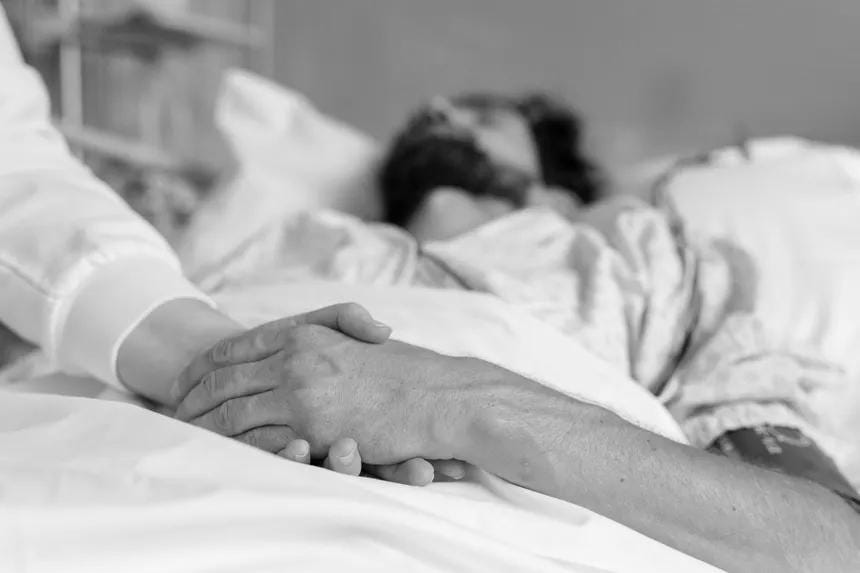
After documenting the horrors of Canada’s Medical Assistance in Dying program, where poverty, disability, and inadequate housing have become acceptable reasons for the state to facilitate your death, we now turn to New York, which has just agreed to sign virtually the same playbook into law.
Governor Kathy Hochul announced in December 2025 that she will sign the Medical Aid in Dying Act in January 2026, making New York the 14th (after IL Gov. Pritzker signed their MAID into law on 12/17) jurisdiction in the United States to legalize physician-assisted suicide. The law will take effect six months later, in July 2026.
This is a profound moral failure.
Let’s Be Clear About One Thing First
There are people who genuinely need access to medical aid in dying. The patient dying of stage 4 pancreatic cancer, whose bones are dissolving from metastases, who wakes up screaming despite maximum doses of opioids. The ALS patient who can no longer breathe without a ventilator, who has made peace with death and simply wants to choose the moment rather than slowly suffocate. The person with Huntington’s disease watching their mind disappear, knowing what’s coming, wanting to leave while they still recognize their family.
These people exist. Their suffering is real. Their autonomy matters.
A narrowly tailored law, strictly limited to terminal diagnoses with imminent death (weeks, not months), requiring genuine unbearable physical suffering that cannot be palliated, with robust psychiatric evaluation and waiting periods, could potentially serve these individuals without opening Pandora’s box.
But that’s not what New York has done.
The Fatal Flaws in New York’s Law
The Six-Month Prognosis Fiction
New York’s law applies to anyone with a terminal illness who has six months or less to live. This sounds reasonable until you understand that prognostic accuracy is abysmal. Studies show doctors are wrong about six-month prognoses roughly 80% of the time. Some patients given six months to live are dead in six weeks. Others are alive five years later.
The law doesn’t require unbearable suffering. It doesn’t require that pain cannot be managed. A person who receives a terminal cancer diagnosis, even if they’re not currently in pain, even if they have months of quality life ahead, can immediately begin the process to end their life.
No Requirement for Suffering
Read that again: the law does not condition eligibility on experiencing pain or suffering. A person who suddenly learns they have a form of terminal illness is eligible almost immediately, even without painful symptoms. They could be feeling fine, have six good months ahead of them, but the law says they can die now.
This isn’t about ending suffering. It’s about ending lives that might still contain joy, connection, meaning, and change.
The “Safeguards” Are Theater
Hochul negotiated for additional protections: a five-day waiting period, mandatory mental health evaluation, video/audio recording of the request, and a residency requirement.
Five days. FIVE DAYS between writing the prescription and filling it. Not five weeks. Not even fifteen days like Oregon requires. Five days to reconsider whether you want to die.
The mental health evaluation? It’s to assess “capacity,” basically, are you cognitively able to make the decision. It’s not to assess whether you’re clinically depressed, whether you’re being coerced by family members who want your house, whether your “terminal” prognosis might be wrong, or whether better palliative care could transform your final months.
The Coercion Problem That Everyone Ignores
Here’s what keeps disability rights advocates up at night: financial coercion doesn’t look like a villain twirling his mustache. It looks like:
An inheritance-hungry son who keeps mentioning how expensive mom’s care is
An insurance company that denies coverage for a $15,000/month drug but would happily cover a $500 lethal prescription
A daughter feeling guilty about “being a burden” as her family struggles to afford her care
A patient who can’t afford home care learning that dying would be cheaper for everyone
The law prohibits anyone who “may benefit financially” from serving as a witness. Great. But it doesn’t stop that person from being in the room every day, sighing about medical bills. It doesn’t stop the insurance company from suggesting this “option” while denying life-extending treatment.
Canada has documented cases of exactly this happening. Not theoretical concerns, actual cases where insurance companies offered MAID while denying treatment, where people cited poverty and lack of housing as reasons for choosing death.
New York looked at this evidence and said: “We’ll do it anyway, but with a five-day waiting period.”
What New York Should Have Learned from Canada
Canada started exactly where New York is starting: “This is just for people who are terminally ill and suffering.” The slippery slope was dismissed as religious fearmongering.
Then reality happened:
2016: Canada legalizes MAID for people with terminal illnesses who are in decline 2021: Expansion to “Track 2,” people who aren’t terminally ill but have chronic conditions causing suffering 2023: 13,241 MAID deaths, 4.1% of all Canadian deaths 2027: Mental illness as a sole condition will become eligible (currently delayed)
The UN’s Special Rapporteur on the Rights of Persons with Disabilities has called for Canada to repeal Track 2 MAID entirely, stating it violates international disability rights.
The Cases That Should Terrify Us
Alan Nichols: A 61-year-old man with depression who applied for MAID while hospitalized for suicidal ideation. Approved. His family only learned about it AFTER his death.
Rosina Kamis: Listed “inability to afford medication” and lack of housing alongside her medical conditions in her MAID application.
A 51-year-old woman: Chose MAID after multiple requests for disability benefits were denied. “I don’t want to die,” she told reporters, “but I have no other choice.”
Multiple veterans: Veterans Affairs Canada employees inappropriately suggested MAID to at least four veterans seeking help with PTSD and other service-related conditions.
These aren’t outliers. They’re features of a system that presents death as a solution to social problems.
The Disability Rights Community Is United in Opposition
Every major disability rights organization that takes a position on assisted suicide opposes it. Every single one.
Not Dead Yet, the Center for Disability Rights, the American Association of People with Disabilities, the Autistic Self Advocacy Network, ADAPT, all opposed.
Why? Because they understand something that able-bodied legislators don’t: when you’re disabled in America, the pressure to die to stop being a “burden” is already crushing. You don’t need the state legitimizing that pressure by offering you a prescription for death.
The Center for Disability Rights in New York stated bluntly: “Really, there is nothing to add [to make this acceptable]. To think there are final adequate safeguards is misleading.”
The New York Association on Independent Living warned: “Experience in other states demonstrates that so-called ‘safeguards’ are quickly eroded, leading to expansions of eligibility and a growing normalization of suicide for people who could otherwise live meaningful lives with appropriate supports.”
The Medical Community Is Not United Behind This
The American Medical Association opposes physician-assisted suicide. So do many individual physicians who understand that their role is to heal, not to kill.
The New York State Medical Society supports it. So do many doctors. But let’s be honest about what this does to the physician-patient relationship: it introduces the option that your doctor, the person supposed to fight for your life, might instead offer you death.
The Fundamental Philosophical Problem
Here’s what defenders of these laws never want to address: We are creating a two-tiered system of suicide prevention.
If you’re young and healthy but suicidal, we pour resources into preventing your death. We hospitalize you involuntarily if necessary. We tell you that suicide is never the answer, that depression lies, that things can get better.
If you’re old, sick, or disabled and suicidal, we say: “That’s different. That’s rational. Here’s a prescription.”
The implicit message is unmistakable: some lives are worth fighting for, and some are not.
The New York State Catholic Conference, joining with the Orthodox Jewish community in rare unified opposition, articulated this perfectly: “How can any society have credibility to tell young people or people with depression that suicide is never the answer, while at the same time telling elderly and sick people that it is a compassionate choice to be celebrated?”
This contradiction is not a minor philosophical inconsistency. It’s a fundamental moral incoherence that reveals what we actually believe about the value of different lives.
The Economic Reality No One Wants to Discuss
MAID is cheap. A lethal prescription costs a few hundred dollars.
Quality end-of-life care is expensive. Palliative care, home health aides, pain management specialists, hospital beds, these cost tens or hundreds of thousands of dollars.
In a for-profit healthcare system, what do you think happens when death becomes a covered “treatment option”?
Studies have already documented insurance companies denying expensive treatments while noting that assisted suicide is available. Canada’s Parliamentary Budget Officer calculated that MAID saves the healthcare system millions annually.
When death becomes cheaper than care, the “choice” stops being free.
What New York Should Have Done Instead
If New York genuinely cared about end-of-life autonomy and reducing suffering, here’s what the state should have done:
Massively expand palliative care access – Most New Yorkers don’t have adequate access to quality hospice and palliative care. Fix that first.
Ensure no one chooses death due to poverty – Increase disability benefits, create accessible housing, guarantee home healthcare access. Make living with disability actually viable.
Address the mental health crisis – Depression is treatable. Providing mental healthcare instead of death would be novel.
Improve pain management – Many people fear end-of-life suffering because they’ve seen loved ones die in agony due to inadequate pain control. Modern palliative care can manage almost all physical pain.
THEN, and only then, consider an extremely narrow law limited to:
Truly imminent death (weeks, not months)
Documented unbearable physical suffering that cannot be palliated
Mandatory psychiatric evaluation by a specialist in end-of-life issues
Minimum 30-day waiting period
Witnessed documentation at multiple time points
Prohibition in any case involving financial hardship or lack of access to care
Sunset clause requiring renewal and comprehensive review every five years
But New York didn’t do any of that. Instead, it looked at Canada’s disaster and said, “Yes, we’ll have what they’re having.”
The Slippery Slope Is Not a Fallacy: It’s a Documented Reality
“Slippery slope” is usually dismissed as a logical fallacy. But in the case of assisted suicide, it’s not a hypothetical, it’s recent history.
Every jurisdiction that has legalized assisted suicide has expanded it:
Oregon (1997): Started with terminal illness only. Patients citing “loss of autonomy” and “being a burden” as reasons.
Netherlands (2002): Now includes children, people with dementia who made advance directives, people with mental illness, and people who are simply “tired of living.”
Belgium (2002): Extended to children in 2014. Has euthanized people for depression, anorexia, and post-surgical complications.
Canada (2016): Went from terminal illness to chronic conditions in five years. Mental illness is next.
The pattern is obvious and consistent: what starts as “only for terminal illness with unbearable suffering” expands to “basically anyone who wants to die and has a doctor who agrees.”
Proponents in New York will insist “that won’t happen here.” They’re either lying or delusional.
Historical Echoes: From ‘Mercy Killing’ to Genocide
New York’s MAID law doesn’t exist in a vacuum. It’s part of a troubling historical continuum where societies have medicalized the elimination of “burdensome” lives, often starting with the disabled and escalating to atrocity.
Nazi Germany’s Aktion T4 program launched in 1939, authorizing physicians to “euthanize” disabled children and adults as an act of mercy and fiscal relief. What began as targeted killings, over 70,000 gassed or injected in hospitals, morphed into the machinery of the Holocaust, where eugenics ideology justified the genocide of 6 million Jews and millions more. Doctors led it, blending science with state policy to deem certain lives “unworthy.”
Closer to home, the U.S. eugenics movement sterilized over 60,000 people from the early 1900s to the 1970s, disproportionately targeting the disabled, poor, racial minorities, and Indigenous women. Upheld by the Supreme Court in Buck v. Bell (1927), it was sold as preventing “degeneracy” for the greater good.
Canada shares this dark legacy: provinces like Alberta and British Columbia enforced sexual sterilization laws until the 1970s, disproportionately affecting Indigenous women, many coerced or forced without consent as part of colonial efforts to reduce populations deemed “unfit.” These practices continued informally into recent decades, echoing the same ableist and racist rationales.
Today’s Track 2 MAID in Canada has been condemned by disability advocates and Indigenous leaders as “neo-eugenics,” perpetuating colonial harms. Vulnerable Indigenous and racialized disabled people face heightened risks, where poverty, inadequate housing, and systemic neglect coerce “choices” toward death, reviving the logic that certain lives are too costly or burdensome to support.
The UN Committee on the Rights of Persons with Disabilities, in its 2025 review, explicitly called for repealing Track 2, warning it violates disability rights through ableist assumptions and inadequate consultation with Indigenous communities.
These aren’t distant horrors; they’re warnings. When we legitimize state-facilitated death for the sick and disabled, framed as autonomy but driven by cost-cutting and ableism, we risk replanting those same seeds. New York’s law, with its weak safeguards and parallels to Canada’s early MAID, ignores this history at our peril.
The Uncomfortable Truth About “Dignity”
The phrase “death with dignity” is marketing genius. Who could oppose dignity?
But here’s the uncomfortable question: Why is death while disabled or seriously ill considered dignified, while living disabled or seriously ill is not?
The entire framing reveals our society’s ableism. We’ve decided that certain states of existence are inherently undignified, being unable to walk, needing help in the washroom, losing independence, requiring care from others.
But disabled people live full, meaningful lives in these states all the time. They find joy, create art, love their families, contribute to society. The problem isn’t that their lives lack dignity, the problem is that we see them as undignified.
MAID doesn’t give people dignity. It allows them to escape a life that an ableist society has deemed not worth living.
What Happens Next
The amended bill will pass the New York legislature in January 2026. Hochul will sign it. It takes effect in July 2026.
Within five years, I predict:
Expansion to non-terminal chronic conditions (”Track 2”)
Cases of people choosing death due to poverty or lack of care
Insurance company denials of treatment with suggestions to consider MAID
Lawsuits from disability rights organizations
Calls to expand further to include advance directives for dementia patients
Eventually, mental illness as a standalone criterion
Mark this. Come back in five years and check how many of these predictions came true.
The Alternative Vision
Imagine if New York had taken all the energy, political capital, and money that went into legalizing assisted suicide and instead used it to:
Guarantee home care for every disabled person who needs it
Ensure no one lives in a nursing home who doesn’t want to
Make palliative care universally accessible
Train every doctor in pain management
Provide robust mental health services
Increase disability benefits to a living wage
Build accessible, affordable disabled/elderly housing
Create community support programs that address isolation
Imagine if we fought as hard to make disabled and dying people’s lives bearable as we fought to give them an easy death.
But that would be expensive. It would require sustained effort. It would mean actually valuing disabled and dying lives.
Death is cheaper. Death is easier. Death solves the problem of expensive, difficult-to-care-for people by eliminating the people.
Conclusion: The Path We’ve Chosen
New York had a choice. It could have looked at Canada’s expansion of MAID, now accounting for nearly 5% of all deaths, with UN condemnation for violating disability rights, with documented cases of people dying due to poverty, and said, “Not here. We’ll protect our most vulnerable.”
Instead, New York said: “That looks great. We’ll take one of those, with a five-day waiting period.”
This law will be sold as compassion. As freedom. As dignity. As patient autonomy.
It is none of those things.
It is society’s abandonment of its obligation to care for the suffering. It is the normalization of suicide for people whose real problem is that we’ve failed to provide them adequate support. It is the logical endpoint of a healthcare system that views expensive, complicated patients as problems to be eliminated rather than people to be served.
Yes, there are people who genuinely need access to hastened death as the only way to end unbearable, unrelievable physical suffering at life’s end. Those people deserve compassion and options.
But this law will be used by… will kill… far more people whose real need was for better healthcare, more support, financial security, and a society that valued their lives.
And when that happens, New York will look at the bodies and say the same thing Canada says: “But they consented.”
Consent given under coercion isn’t consent. Consent given without real alternatives isn’t consent. Consent given in a society that tells you you’re a burden isn’t free consent.
New York just legalized suicide for second-class citizens, dressed it up as compassion, and called it progress.
Future generations will look back on this the same way we look back on forced sterilization of disabled people, as an atrocity that was legal, medicalized, and committed in the name of mercy.
The only question is how many people will die before we admit what we’ve done.
New York’s Medical Aid in Dying Act is expected to be signed into law in January 2026 and take effect in July 2026. If you or someone you know is struggling with thoughts of suicide, the National Suicide Prevention Lifeline is available 24/7 at 988. Your life has value, regardless of your health status or what society tells you.