


Dedication
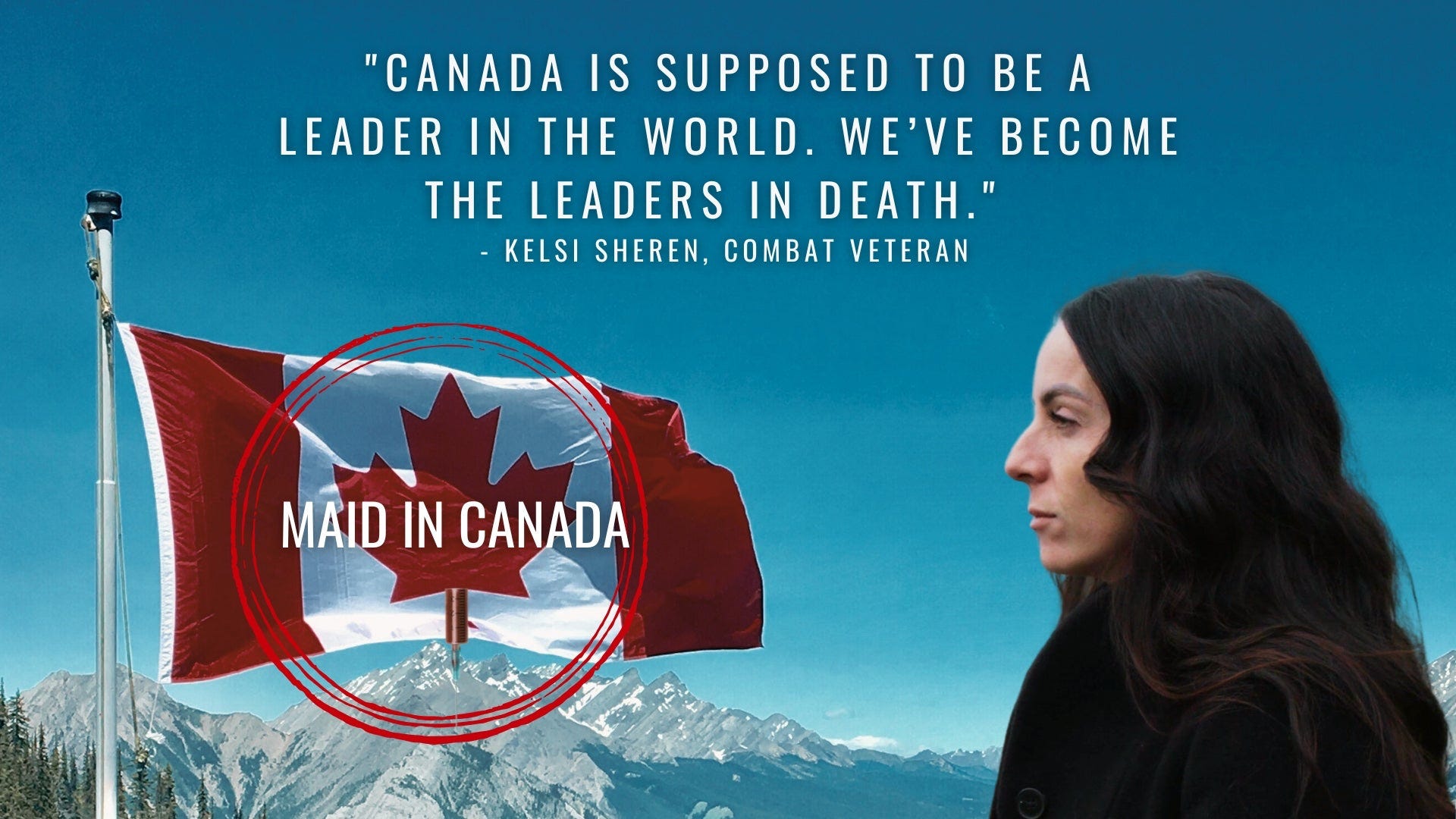
To Kelsi Sheren, the 19-year-old artillery gunner who came home from Afghanistan broken but refused to stay that way, and who has made it her mission to ensure that other veterans know they don't have to stay broken either. When Canada began offering death to those it had failed to heal, you became their voice, proving that PTSD is not a death sentence and that warriors deserve care, not convenience. This article exists because you refused to let them die quietly.
The Bottom Line
Canada's Medical Assistance in Dying (MAID) program has become the world's fastest-growing euthanasia system, now accounting for 4.7% of all deaths in the country. What began as a carefully limited option for terminally ill patients has expanded into a program that increasingly serves people whose primary suffering stems from poverty, inadequate healthcare, housing instability, and social isolation rather than terminal illness. Recent UN human rights experts have called for Canada to halt non-terminal euthanasia, warning that the country is violating international disability rights standards.
By the Numbers: A Staggering Growth
The trajectory is breathtaking in its scope. In 2016, when MAID was first legalized, 1,018 Canadians chose to end their lives through the program, representing just 0.38% of all deaths that year. By 2023, that number had exploded to 15,343 deaths, accounting for 4.7% of all Canadian deaths. That's a fifteen-fold increase in just seven years.
To put this in perspective, Canada exceeded its own government projections by a full decade. Health Canada had predicted it would take until 2033 for MAID deaths to reach 4% of total deaths. They hit that target in 2022, eleven years early. By 2022, MAID had effectively become Canada's fifth leading cause of death, tied with stroke-related fatalities.
The growth rate itself tells a story. From 2019 to 2022, MAID cases grew by an average of 31% annually. While the 2023 growth rate slowed to 15.8%, the sheer volume means that Canada now has one of the world's highest assisted death rates, trailing only the Netherlands.
What MAID Was Meant to Be
Before examining how MAID went wrong, it's crucial to acknowledge what it was designed to do, and the genuine human need it was meant to address. The original vision of MAID served people facing truly unbearable circumstances: terminal cancer patients enduring excruciating pain despite maximum palliative care, individuals with ALS watching their bodies systematically shut down, or those with end-stage neurological diseases facing months of inevitable decline.
Consider the case of a 68-year-old woman with metastatic pancreatic cancer, her body wracked with pain that even high-dose opioids couldn't touch, facing weeks of agony before an inevitable death. Or a 45-year-old father with ALS, still mentally sharp but unable to speak, swallow, or breathe without assistance, watching his young children witness his deterioration. These are the situations for which MAID was created, where death is not only inevitable but imminent, and where medical intervention can spare people unnecessary suffering in their final days or weeks.
Track 1 MAID, covering patients whose death is "reasonably foreseeable," continues to serve this purpose. The vast majority of MAID cases, 96% in 2023, fall into this category. These are people who are genuinely dying, for whom palliative care has reached its limits, and who make informed decisions about their final moments with the support of their families and medical teams.
The ethical foundation here is solid: when medicine cannot preserve life or provide comfort, it should at least be able to prevent prolonged suffering. This principle has broad support across the political spectrum and represents a genuine advance in compassionate end-of-life care.
The Expansion That Changed Everything
But the turning point came in 2021 with Bill C-7, which created the "two-track system." While Track 1 preserved the original vision of MAID for terminally ill patients, Track 2 opened the door to something entirely different: people with chronic conditions, disabilities, and long-term illnesses who could potentially live for years or decades with proper support.
This expansion didn't happen in a vacuum. It came after a 2019 Quebec court ruling struck down the requirement that death be imminent, arguing it was unconstitutional. The federal government chose not to appeal this decision, effectively allowing it to reshape MAID nationally.
While Track 2 cases represent only 4% of total MAID deaths, their significance extends far beyond the numbers. These are people who, in many cases, are choosing death not because they're dying, but because living has become unbearable due to circumstances that society could potentially address.
When Poverty Drives the Death Decision
The most troubling aspect of Canada's MAID expansion lies in the documented cases where social circumstances, rather than medical conditions, appear to be the primary driver of death requests. These aren't theoretical concerns, they're real people whose stories have been meticulously documented.
Take Rosina Kamis, a 41-year-old woman with fibromyalgia and chronic leukemia. While her medical conditions were serious, they weren't terminal. What drove her to MAID in 2021 was an eviction notice and the prospect of institutionalization. In her own recordings and writings, reviewed by investigators, she was explicit about her motivations. "I can't believe it's so easy for me to get MAID," she wrote. "The suffering I experience is mental suffering, not physical." Perhaps most heartbreakingly, she observed, "I think if more people cared about me I might be able to handle the suffering."
Then there's the case of Normand Meunier, a quadriplegic man who died by MAID in January 2025. His story began with a simple hospital visit for a respiratory virus. Left without access to an appropriate mattress for 95 hours, just shy of four full days, he developed painful bedsores. Facing this entirely preventable suffering, he applied for MAID. He died, as one report put it, "for want of a mattress."
Currently, a 65-year-old man known as "Les" Landry is seeking MAID after losing his disability benefits upon turning 65. "I turned 65 [and] lost all my disabilities benefits and now a senior in poverty," he wrote in his application. "I am not going to live my life like this." Landry explicitly states he doesn't want to die, but sees MAID as his only viable option.
These cases illuminate a harsh economic reality. About 25% of disabled Canadian adults live in poverty, with disability benefits ranging from a meager $705 per month in New Brunswick to $1,685 in Alberta. In Ontario, disability support provides $1,300 monthly, barely enough to cover rent for a one-bedroom apartment in Toronto, which averages nearly $2,500 per month.
The financial incentives are stark and troubling. The Parliamentary Budget Officer has calculated that MAID saves Canada $86.9 million annually, with the Track 2 expansion adding another $62 million in savings. When death is cheaper than care, the moral calculus becomes deeply problematic.
The Veterans Scandal: Betraying Those Who Served
Perhaps no cases have generated more outrage than the documented instances of Veterans Affairs Canada caseworkers offering MAID to veterans seeking help for PTSD. Between 2019 and 2022, at least four to five veterans were inappropriately offered assisted death by VA staff. In one particularly egregious case, a caseworker told a veteran that MAID was preferable to "blowing your brains out against the wall", this to a veteran who had never even contemplated suicide and was simply seeking help for his service-related injuries.
Christine Gauthier, a Paralympic athlete who competed for Canada, was offered MAID when she contacted Veterans Affairs seeking assistance with her disability needs. The scandal became so significant that it was referred to the RCMP for investigation, with the government initially claiming these were isolated incidents by a single rogue employee.
The irony is devastating. Canada spends billions on military operations abroad while offering its injured veterans death as a solution to their service-related suffering. Veterans, already at higher risk for suicide than the general population, were being offered state-sanctioned death instead of the care and support they had earned through their service.
The Next Frontier: Mental Illness
Canada had planned to expand MAID eligibility to people whose sole condition is mental illness, originally scheduled for March 2023. Widespread opposition has forced repeated delays, with the current target date pushed to March 17, 2027. The controversy isn't surprising given the implications.
Mental illness, by its very nature, often involves periods of hopelessness and despair that can be temporary and treatable. The idea of offering permanent solutions to potentially temporary problems has horrified mental health professionals, disability advocates, and ethicists. Parliamentary committees have repeatedly warned that Canada's healthcare system simply isn't prepared for such an expansion.
Even more controversially, some advocates have proposed extending MAID to "mature minors", children as young as 12 years old. The prospect of the state assisting in the suicide of children whose brains are still developing and whose circumstances could dramatically change has generated fierce opposition from disability rights groups and child advocates.
International Condemnation
The international community has taken notice, and the response has been damning. In March 2025, the United Nations Committee on the Rights of Persons with Disabilities issued a comprehensive report expressing "extreme concern" about Canada's MAID laws. The committee called for Canada to repeal Track 2 MAID entirely, cancel the planned mental illness expansion, and reject proposals for mature minor access.
The UN experts didn't mince words. They concluded that Canada's expanded MAID program violates international disability rights standards and creates a system where death is offered as relief from systemic failures rather than addressing those failures. The report represents a stunning rebuke from the international human rights community to a country that has long prided itself on its progressive values.
The Medical Establishment's Troubling Role
Some of the most concerning aspects of MAID's expansion involve the attitudes and practices of medical providers themselves. Dr. Ellen Wiebe, one of Canada's most prolific MAID providers, has stated that patients with "unmet needs" around "loneliness and poverty" still have "rights" to assisted death. Dr. Stephanie Green, who has performed over 300 euthanizations, refers to them as "deliveries", likening the ending of life to childbirth.
Healthcare institutions have struggled with boundaries. In August 2022, Vancouver Coastal Health was caught asking patients seeking mental healthcare for suicidal ideation if they would like to consider MAID. The hospital claimed this was a method of assessing suicide risk, but patients experienced it as undermining their access to suicide prevention care.
Systematic Failures in Oversight
Multiple oversight bodies across Canada have documented serious problems with MAID implementation. British Columbia's MAID Oversight Unit noted 22 referrals to law enforcement between 2019 and 2023 for Criminal Code violations, including incomplete documentation and practitioners who refused to cooperate with oversight. Quebec reported 16 non-compliant deaths in 2023-2024 alone.
Academic research has been equally critical. A 2023 paper concluded that "The Canadian MAiD regime is lacking the safeguards, data collection, and oversight necessary to protect Canadians against premature death." When the system designed to protect vulnerable people is itself failing, the consequences become life and death matters.
The False Choice Problem
What emerges from this examination is what critics call the "false choice" problem. Rather than addressing the systemic issues that make life unbearable for vulnerable Canadians, inadequate disability benefits, lack of accessible housing, healthcare wait times, insufficient mental health services, and social isolation, MAID increasingly offers death as an alternative.
This isn't about opposing individual choice or dignity in dying. It's about recognizing that choices made under coercive circumstances aren't truly free choices. When society fails to provide the basic supports that would make life livable, offering death as the solution becomes a form of systemic abandonment dressed in the language of compassion.
Where Do We Go From Here?
Canada stands at a crossroads. The UN condemnation, the documented cases of poverty-driven deaths, the veterans scandal, and the targeting of people with mental illness demand a fundamental reassessment. Other countries are watching Canada's experiment with deep concern, and some are explicitly rejecting similar expansions based on Canada's troubling experience.
The path forward requires honest acknowledgment that MAID has evolved far beyond its original purpose. What began as a careful, limited program for terminally ill patients has become something approaching what critics call "austerity eugenics", a systematic response to social problems that eliminates the person rather than addressing their circumstances.
Reform doesn't mean eliminating MAID entirely, but it does mean returning to its original purpose and rebuilding the safeguards that have proven inadequate. It means massive investment in the social supports that would make death less appealing than life. Most fundamentally, it means recognizing that a society's measure isn't how efficiently it can facilitate death, but how effectively it can support life with dignity.
A Moral Reckoning
Canada's MAID program represents a profound moral test. When the international community, disability advocates, veterans' groups, and mental health professionals are all raising alarms, the response can't be to simply forge ahead. The stakes are too high, and the evidence too clear.
The question facing Canada isn't whether people should have end-of-life choices, most Canadians support that principle. The question is whether those choices should extend to people whose primary problem isn't that they're dying, but that society has failed to provide the conditions necessary for them to live with dignity. When death becomes healthcare policy, when poverty becomes a qualifying condition, when veterans are offered suicide instead of support, something has gone profoundly wrong.
Canada built MAID with the best of intentions, but intentions don't justify outcomes. The program has become a convenient solution to inconvenient people, a cost-saving measure disguised as compassion. That's not dignity, it's disposal. And it's time for Canada to confront that uncomfortable truth.
This analysis is based on Canadian government reports, UN human rights documentation, parliamentary testimony, court records, and investigative journalism. While recognizing the genuine complexity of end-of-life care, I argue for the highest standards of scrutiny and safeguarding for any system that offers death as a solution.